Personal loan Houston TX gig worker self-employed income proof: what actually works in 2026
⏱️ 7 min read · Last updated: 2026
- Most Houston-area lenders using bank statement underwriting require 3 to 12 months of consecutive bank statements; online lenders typically accept 3 months, credit unions typically want 12.
- Houston credit unions commonly require a minimum of 2 years of verifiable self-employment history before approving a personal loan for 1099 contractors.
- Lenders who pull IRS Form 4506-C transcripts typically require 2 years of filed federal tax returns — meaning a brand-new gig worker will not qualify on tax-return underwriting alone.
- Self-employed borrowers in Texas commonly pay an APR 2 to 5 percentage points higher than comparable W-2 borrowers, reflecting the lender’s income-variability risk premium.
- The Houston–Sugar Land–Woodlands metro area has one of the largest rideshare and delivery workforces in the South, with Uber and DoorDash together estimated to have over 50,000 active gig workers in the metro — a population largely underserved by traditional underwriting models.
Why the standard advice fails Houston gig workers
The rejection letter arrived 48 hours after he applied. A Houston DoorDash driver — three years on the platform, averaging $4,200 a month in deposits — was told his income “could not be verified.” No explanation of what would have worked instead. Just a denial and a hard inquiry on his credit report.
This is the core problem with standard advice on personal loan Houston TX gig worker self-employed income proof: it tells you to “provide proof of income” without specifying which proof, for which lender, under which underwriting model. That gap is not minor. It is the difference between approval and a wasted credit pull.
Most articles on this topic treat all Houston lenders as identical. They are not. Two lenders can both advertise “self-employed borrowers welcome” and operate on completely different verification systems — one pulling a 4506-C tax transcript, the other running a cash-flow analysis on 6 months of bank statements. Your income looks completely different under each method.
The Houston gig economy is enormous. Between Uber Houston operations, DoorDash Texas deliveries, and thousands of independent contractors across construction, healthcare, and creative services, a significant share of Houston’s workforce earns income that does not fit a W-2 box. In 2026, lenders have adapted — but unevenly. Knowing which ones have adapted, and exactly how, is the actual skill.

Which Houston lenders use bank statement underwriting vs. tax return underwriting
Houston lenders fall into three distinct underwriting categories for self-employed applicants, and matching your documentation to the right category is the single most important step in the process.
Category 1: Tax-return-first lenders (traditional banks and most credit unions)
These lenders pull an IRS Form 4506-C transcript to verify your last 2 years of federal returns. If your IRS Schedule C shows $18,000 in net profit after deductions — even though your gross deposits were $52,000 — the lender qualifies you on the $18,000 figure. For Houston gig workers who write off vehicle expenses, phone bills, and health insurance through Stride Health, the Schedule C net can be painfully low.
Category 2: Bank-statement-underwriting lenders (select online lenders)
LendingClub and Avant both offer personal loans where self-employed applicants can submit bank statements rather than tax transcripts. LendingClub typically asks for 3 months of statements; Avant’s requirements can vary by applicant profile but they do not require filed tax returns for all self-employed borrowers. These platforms average APRs in the 10–36% range depending on credit score, and self-employed applicants commonly land 2–5 points higher than equivalent W-2 borrowers.
Category 3: Cash-flow-forward credit unions
A handful of Houston-area credit unions — including some affiliated with the energy and healthcare sectors — will conduct manual underwriting that weighs average monthly deposits over 12 months. These require the 2-year self-employment history minimum and usually want both bank statements and tax returns. The upside: lower APRs and more human flexibility. The downside: slower decisions (5–10 business days vs. 1–2 for online lenders).
For a Houston 1099 contractor whose gross deposits are strong but whose Schedule C net is low, bank statement underwriting is almost always the better first application — not a fallback option.
For a complete walkthrough of local lender options and credit requirements, the personal loan helper Houston TX guide covers both online and brick-and-mortar lenders across the metro.
Can I get a personal loan in Houston TX if I drive for Uber and do not have pay stubs?
Yes — Uber Houston drivers can qualify for a personal loan without traditional pay stubs, provided they use the right documentation and target lenders that accept it. Uber does not issue W-2 forms to drivers; it issues IRS Form 1099-NEC for earnings over $600 annually, and drivers also have access to earnings summaries directly from the Uber driver app.
The most effective documentation package for an Uber Houston driver applying in 2026 includes: 3–6 months of bank statements showing consistent deposit patterns, the most recent IRS Form 1099-NEC, a year-to-date earnings summary from the Uber driver dashboard, and — if available — 1–2 years of filed tax returns including the IRS Schedule C.
DoorDash Texas drivers follow the same path. DoorDash provides a tax summary through its Dasher portal and partners with Stripe for payment processing, which means monthly deposit records are clean and easy to document. The pattern lenders look for is consistency — not a single large month, but 3 or more months of similar deposit amounts.
If your gig income varies seasonally (common in Houston’s weather-sensitive delivery market), lenders using bank statement underwriting will typically average your deposits over the statement period. A 3-month average of $3,500/month qualifies differently than a single month of $6,000. Submit a longer statement window when your income is reliably mid-range; submit a shorter window only if your most recent months represent your typical earnings accurately.

What income documents do Houston lenders accept from self-employed borrowers?
Houston lenders accepting self-employed personal loan applications in 2026 recognize a documented set of alternatives to W-2s. The exact combination required depends on the lender category, but the documents below are the building blocks of any strong application.
- IRS Form 1099-NEC: Issued by platforms like Uber Houston and DoorDash Texas. Shows gross annual earnings. Most lenders require 1–2 years.
- Bank statements (personal or business): 3 months minimum for online lenders; 12 months for most Houston credit unions using bank statement underwriting.
- IRS Schedule C (Profit or Loss from Business): Part of your federal tax return. Shows net income after deductions. Required by tax-return-first lenders; also helps bank-statement lenders verify the business is real.
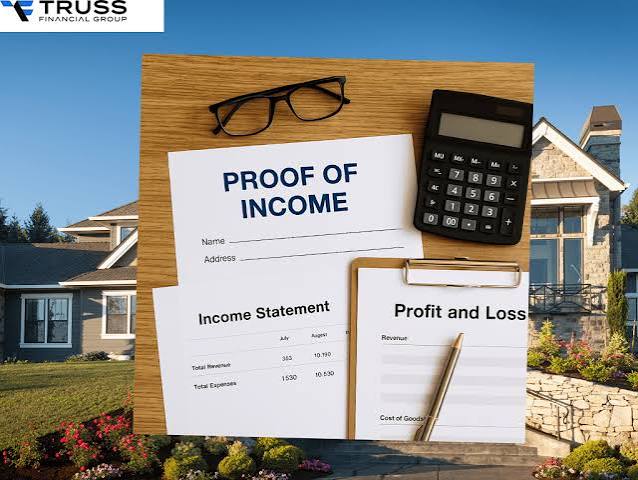
- Profit and loss statement (P&L): A self-prepared or accountant-prepared monthly summary. Accepted by some lenders as a supplement; rarely accepted as a standalone document.
- Platform earnings summary: App-generated PDFs from Uber, DoorDash, or similar platforms. Accepted as supplemental documentation by LendingClub and Avant.
- Business license or DBA registration: Proves the business exists. Relevant for contractors who operate under a business name in Texas.
- IRS Form 4506-C authorization: Many lenders require you to sign this so they can pull your tax transcripts directly from the IRS — faster and more reliable than paper copies.
Understanding the personal loan application process Houston TX step by step helps you sequence these documents correctly before submission — missing one item can delay approval by 3–5 business days even with online lenders.
The IRS Schedule C trap that kills approvals — and how to work around it
The IRS Schedule C is simultaneously your best friend and your biggest liability as a Houston self-employed borrower. It documents your business income officially — but it also reports net profit after every deduction you claimed, which is the number lenders use to qualify you.
Here is the math that trips up most applicants: A Houston rideshare driver who earns $48,000 gross might claim $14,000 in vehicle deductions, $1,800 in phone and data, $2,400 in health insurance through Stride Health, and $1,200 in other business expenses. Net profit on Schedule C: approximately $28,600. Monthly qualifying income: about $2,383. At a standard 43% debt-to-income (DTI) threshold, that limits new monthly debt payments to roughly $1,025 — which covers a personal loan payment, but leaves almost no room for other debt obligations.
The work-around is not to claim fewer deductions — that increases your tax bill. The work-around is to apply to a bank-statement underwriting lender, where the lender averages your gross monthly deposits instead of using Schedule C net. At $48,000 gross, your monthly qualifying income under bank statement underwriting becomes $4,000 — a materially different qualification number.
IRS Schedule C income Houston lender decisions hinge on this net-vs-gross distinction more than almost any other factor. It is worth a 10-minute call to any lender before applying to ask which figure they use.
The mistake that cost one Houston driver two hard inquiries
The DoorDash driver mentioned at the start of this article made a specific, correctable mistake: he applied to two traditional banks before understanding that both used IRS Form 4506-C tax-return underwriting. His Schedule C showed $21,000 net for the prior year — his actual deposits averaged $3,900/month. Both rejections came back within 48 hours. Two hard inquiries. No loan.
The fix took one week. He gathered 6 months of bank statements showing consistent monthly deposits between $3,600 and $4,400. He downloaded his DoorDash year-to-date earnings summary from the Dasher portal. He applied to LendingClub, which uses bank statement underwriting for self-employed applicants. Approved in 36 hours at 19.8% APR for a $6,000 loan — higher than a W-2 borrower would have paid, but approved.
The lesson is not that traditional banks are wrong to use tax returns — they are managing real risk. The lesson is that the application sequence matters enormously. Start with lenders whose underwriting method matches your strongest documentation, not the lenders whose brand name is most familiar.
Two rejected applications from mismatched lenders cost this Houston driver 2 hard credit inquiries and roughly 2 weeks. One targeted application to a bank-statement underwriting lender produced an approval in 36 hours. The income never changed — only the documentation framing did.
If you are also managing existing debt, the debt consolidation loan Houston TX income requirements page covers how self-employed income is treated specifically when the loan purpose is consolidation — the qualifying thresholds are slightly different.
What the approval timeline actually looks like for a 1099 applicant in Houston
Timeline expectations for a 1099 contractor personal loan Houston application differ significantly by lender type. Here is a realistic breakdown based on how each category processes self-employed income verification.
| Lender type | Underwriting method | Docs required | Typical decision time | Typical APR range (self-employed) |
|---|---|---|---|---|
| Online lenders (LendingClub, Avant) | Bank statement underwriting | 3–6 months bank statements, 1099-NEC, earnings summary | 24–72 hours | 12–36% |
| Traditional Houston banks | IRS Form 4506-C tax transcript | 2 years tax returns, Schedule C, bank statements | 3–7 business days | 8–25% |
| Houston-area credit unions | Manual cash-flow + tax return hybrid | 12 months bank statements, 2 years tax returns, proof of 2+ years self-employment | 5–10 business days | 7–20% |
The fastest path to approval for most Houston gig workers in 2026 is an online lender with bank statement underwriting — but the lowest long-term cost is usually a credit union, if you meet the 2-year history requirement and have clean tax returns. These goals are not mutually exclusive: get the online loan for immediate needs, then refinance through a credit union in 12–18 months once you have more documentation depth.
Understanding the true personal loan cost Houston TX monthly payment calculator for self-employed borrowers helps you model what that refinance saves — the APR difference between 19% and 12% on a $6,000 loan over 36 months is roughly $800 in total interest.
One final timing note: if you are within 60 days of filing your next tax return and your prior year Schedule C net was unusually low, it may be worth waiting until the new return is filed and the IRS transcript is available. A stronger most-recent-year filing can shift lender decisions meaningfully, especially at traditional banks and credit unions.
- Match your strongest documentation to the lender’s underwriting method before applying — wrong match means a wasted hard inquiry.
- Bank statement underwriting (LendingClub, Avant) uses gross deposits; tax-return underwriting uses Schedule C net — these can differ by $20,000+ annually for the same borrower.
- Houston credit unions offer the lowest APRs for self-employed borrowers but require 2 years of self-employment history and 12 months of bank statements.
- A co-signer with W-2 income can reduce a self-employed borrower’s APR by 3–6 percentage points on a Houston personal loan application.
Common questions about personal loan Houston TX gig worker self-employed income proof
What income documents do Houston TX lenders require from gig workers?
Houston lenders typically require 3–12 months of bank statements, IRS Form 1099-NEC for each platform (Uber, DoorDash), and a platform earnings summary PDF. Tax-return-first lenders also require 2 years of filed returns including IRS Schedule C. Online lenders like LendingClub and Avant can approve with bank statements and 1099s alone.
How do I prove self-employment income for a Houston personal loan application?
The strongest proof package combines 6 months of bank statements showing consistent monthly deposits, your most recent IRS Form 1099-NEC, and a year-to-date earnings summary from your gig platform. Adding IRS Schedule C from your last filed return further validates the income. Prepare all documents as PDFs before applying to avoid delays.
Which Houston personal loan lenders accept 1099 income instead of W-2?
LendingClub and Avant both accept 1099 income and use bank statement underwriting for self-employed applicants, making them practical options for Houston gig workers. Some Houston-area credit unions also accept 1099 contractors with 2+ years of self-employment history. Traditional banks generally require W-2 income or strong Schedule C net income.
Why do Houston lenders charge higher rates for self-employed borrowers and how can I fight it?
Lenders price in income variability risk — gig income can spike or drop month to month. The most effective counter is 12+ months of consistent bank statements showing stable deposits. A co-signer with W-2 income reduces the rate by 3–6 percentage points in most cases. A credit score above 700 also narrows the self-employed APR premium significantly.
How much gig income do I need to qualify for a $5,000 personal loan in Houston TX?
At a standard 43% debt-to-income threshold and a 36-month term at 20% APR, a $5,000 personal loan carries roughly a $186/month payment. To qualify on that payment alone, you need gross monthly income of approximately $433 — but most Houston lenders require total monthly debt (including the new loan) to stay under 43% of income. In practice, $2,000–$2,500/month in documented income is a realistic minimum for a $5,000 loan with no other debt obligations.
Can I get a personal loan in Houston TX if I just started driving for Uber and have less than a year of income?
Harder, but possible. Houston credit unions and traditional banks typically require 2 years of self-employment history. Online lenders like Avant are more flexible — 3–6 months of consistent bank deposits may be sufficient if your credit score is 640 or above. The less history you have, the more your credit score carries the application.
Does deducting business expenses on IRS Schedule C hurt my personal loan chances in Houston?
Yes — for lenders that use IRS Form 4506-C tax transcript underwriting. The higher your deductions, the lower your Schedule C net income, which is the figure these lenders use to qualify you. The solution is to apply to bank-statement underwriting lenders, where gross deposits matter more than Schedule C net. Do not reduce legitimate deductions to improve loan qualification.
The bottom line
Houston gig workers and 1099 contractors have a real, workable path to personal loan approval in 2026 — but it runs through lender selection, not document scrambling. The core decision is this: does your documented gross income (bank statements) look stronger than your Schedule C net
See also: personal loan helper Houston TX
See also: debt consolidation loan Houston TX income requirem
See also: personal loan application process Houston TX step